 Chill-Dogs
Best Dog Crates for Anxiety
Some dogs settle in a familiar wire crate. Others do better with an enclosed kennel that blocks visual stimulation. And some escape artists need a heavy-duty crate to help keep them safe.
As an Amazon Associate, we earn from qualifying purchases.
Safety First: A Crate Is Not a Separation Anxiety Cure
A crate can be a useful management tool for some anxious dogs, but it is not a treatment for separation anxiety by itself. Humane World specifically advises creating a safe space instead of defaulting to a crate for separation anxiety. Dogs can continue panicking inside a confined space and may injure themselves trying to escape.
ASPCA separation-anxiety guidance and Oregon Humane crate-training guidance make the same practical point: watch the dog’s actual pattern. If confinement makes panic worse, use a room, pen, veterinary behavior support, and gradual training rather than trying to solve the problem with a stronger crate.
Choose wire for dogs with mild anxiety who already tolerate crates, enclosed plastic for dogs who need less visual stimulation, and heavy-duty containment only when escape risk makes standard crates unsafe.
Anxiety Crate Picks
These three picks address different anxiety issues. Do not size down for containment. Your dog still needs room to stand, turn around, and lie down naturally.

MidWest Life Stages Dog Crate
- Includes multiple sizes and a divider panel for puppy-to-adult crate setup
- Heavier-gauge steel than the iCrate line for a sturdier wire-crate feel
- A stronger choice for an especially active puppy

Petmate Sky Kennel
- Enclosed plastic shell reduces visual stimulation compared to open wire crates
- 360-degree ventilation and tie-down holes support travel use
- Includes travel-prep accessories such as live-animal stickers, cup, ID stickers, and absorbent pad
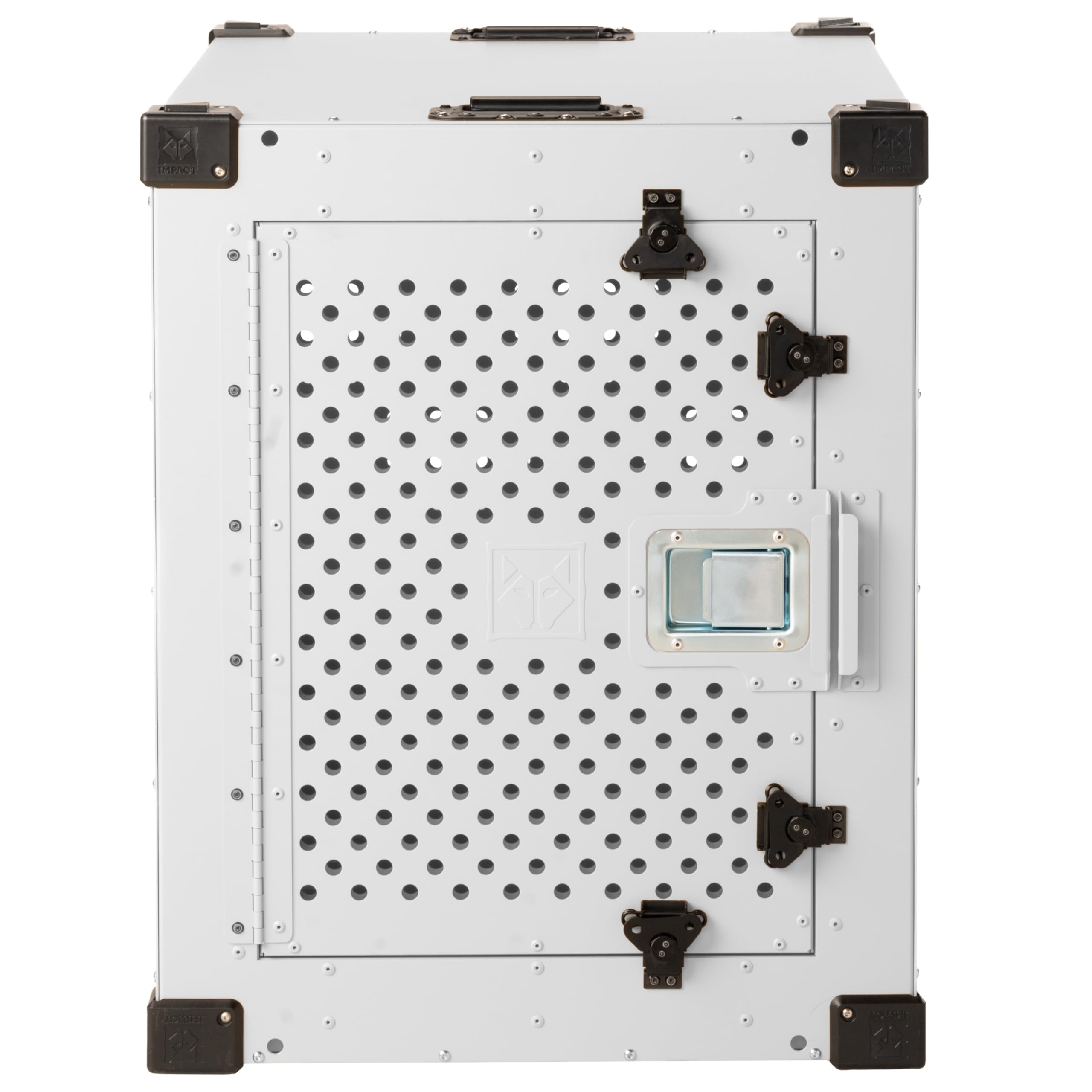
Impact High Anxiety Dog Crate
- Powder-coated aluminum crate built for dogs who damage standard wire crates
- Zinc steel paddle latch plus four butterfly latches add multiple security points
- Small circular ventilation holes are designed to limit tooth access while preserving airflow
Use Life Stages or Sky Kennel When
- Your dog is already crate-trained and does not panic in confined spaces
- The anxiety is mild, situational, or linked to overstimulation
- Your goal is a predictable rest space
- You can monitor the dog’s response and change course if distress escalates
Consider Impact When
- Your dog has escaped from or damaged standard crates
- Wire bars create tooth, paw, or latch-injury risk
- You are also working on underlying anxiety issues with training or professional support
- You need containment as harm reduction
Anxiety Crate FAQ
- Can a crate help with dog anxiety?
- Sometimes, but only for dogs who already feel safe in a crate. For mild anxiety, a familiar crate can reduce pacing and provide predictability. For true separation anxiety or confinement panic, a crate can make distress worse.
- What is the best crate for mild anxiety?
- For mild anxiety in a dog who tolerates wire crates, MidWest Life Stages is the practical pick because it is sturdier than lighter wire crates while still offering airflow, visibility, and a divider panel.
- Is an enclosed crate better for anxious dogs?
- An enclosed plastic crate like the Petmate Sky Kennel can help dogs who settle better with less visual stimulation. It is not automatically better for every anxious dog, especially dogs who panic when confined.
- When does a heavy-duty anxiety crate make sense?
- A heavy-duty crate makes sense when a dog has a real escape history and standard crates create injury risk. It should still be part of a broader plan that addresses the underlying anxiety.